


Reviewed By: Personal Injury Team Last Updated: October 11, 2026
If a traffic light is broken, what should a driver do? A malfunctioning traffic light can wreak havoc on daily commuters just trying to get home. Traffic light outages can be due to inclement weather, a car accident, or a mechanical malfunction. In the event that you approach a traffic light that is out, it’s important to know what to do for your safety and those around you.
If a traffic accident occurs due to a traffic light being out, call Hoffman Law Firm and let us handle the insurance company, so you don’t have to worry about it. Simply, contact us!
Key Takeaways
- When facing a malfunctioning traffic light with flashing red, treat it as a 4-way stop, giving way to the right and being cautious with pedestrians.
- Approach flashing yellow lights with care, ensuring the way is clear before proceeding.
- At intersection with no lights functioning, treat it as a 4-way stop, taking your time, yielding to the right, and following safety measures for everyone’s well-being.
What to Do If a Traffic Light is Broken (or Malfunctioning)?
IF LIGHTS FLASH RED 🛑
When you approach an intersection that is experiencing a traffic light outage and the lights are flashing red, first come to a complete stop as you would at a working red light.
Secondly, if another vehicle approaches at the same time, treat the intersection as a 4-way stop and let the vehicle to the right go first.
As usual, drivers turning left must yield to the driver going straight, and all drivers must yield to pedestrians. Thirdly, always approach the middle of the intersection with caution to ensure other vehicles are following proper rules.
IF LIGHTS FLASH YELLOW 🟡
If a traffic light is broken and flashing yellow, the rules for drivers slightly change. First, when entering an intersection with a flashing yellow traffic light, approach with caution, monitor other drivers, ensure there is not a pedestrian entering the crosswalk, then safely proceed through the intersection.
NO LIGHTS FLASHING
If you approach an intersection where the lights have gone out completely, treat the intersection as a four-way stop and always proceed with caution.
Upholding the Rule of Law for Intersection Safety
When the traffic lights go dark and stop functioning, it’s crucial to stick to the rule of law to ensure safety at intersections. This might sound a bit technical, but it’s basically about how we should behave when the traffic lights are broken. Instead of just driving through, there’s a specific way to handle things that helps prevent accidents.
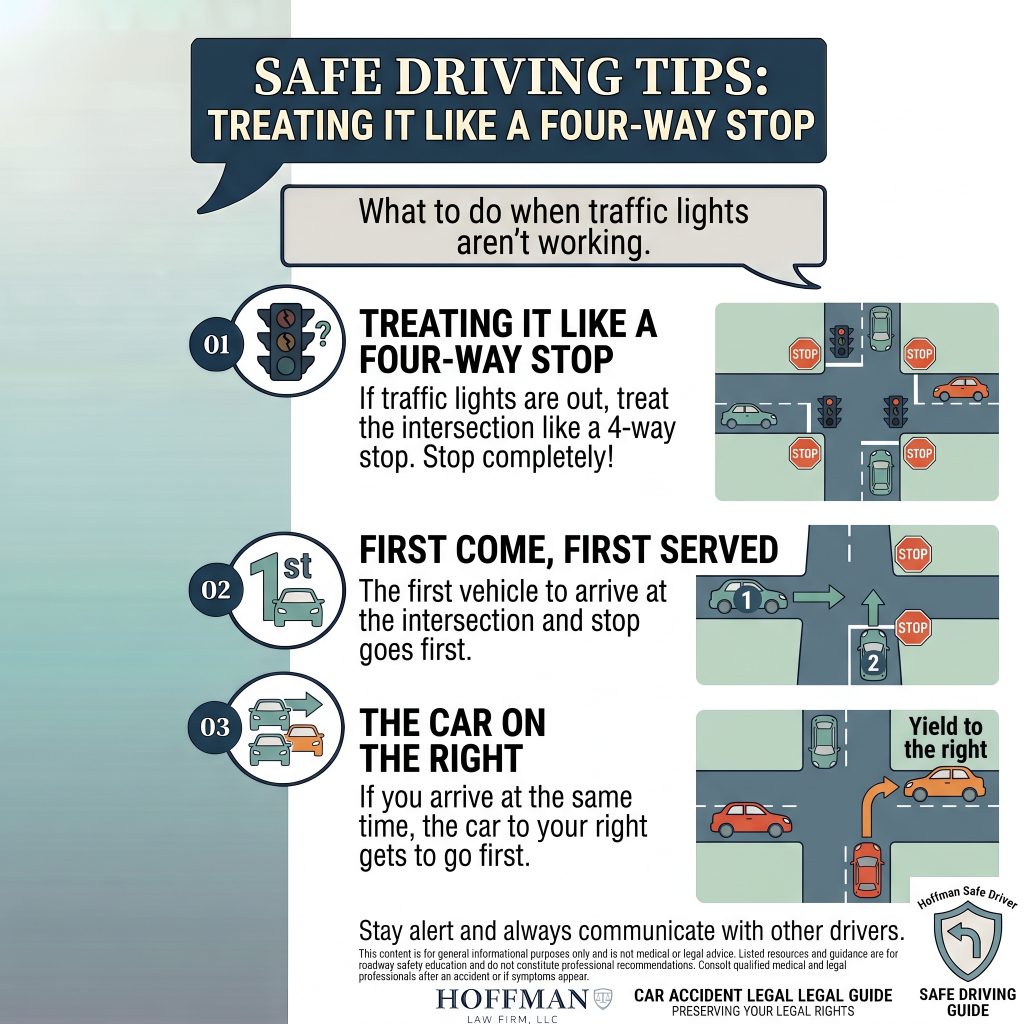
Treating It Like a Four-Way Stop
Imagine you’re driving towards an intersection and the traffic lights aren’t working. If there are stop signs for all the directions, then you should treat it like a four-way stop. This means that the first car to arrive at the intersection gets to go first, and then the car on its right goes next. If two cars get there at the same time, the car on the right has to let the car on the left go first.
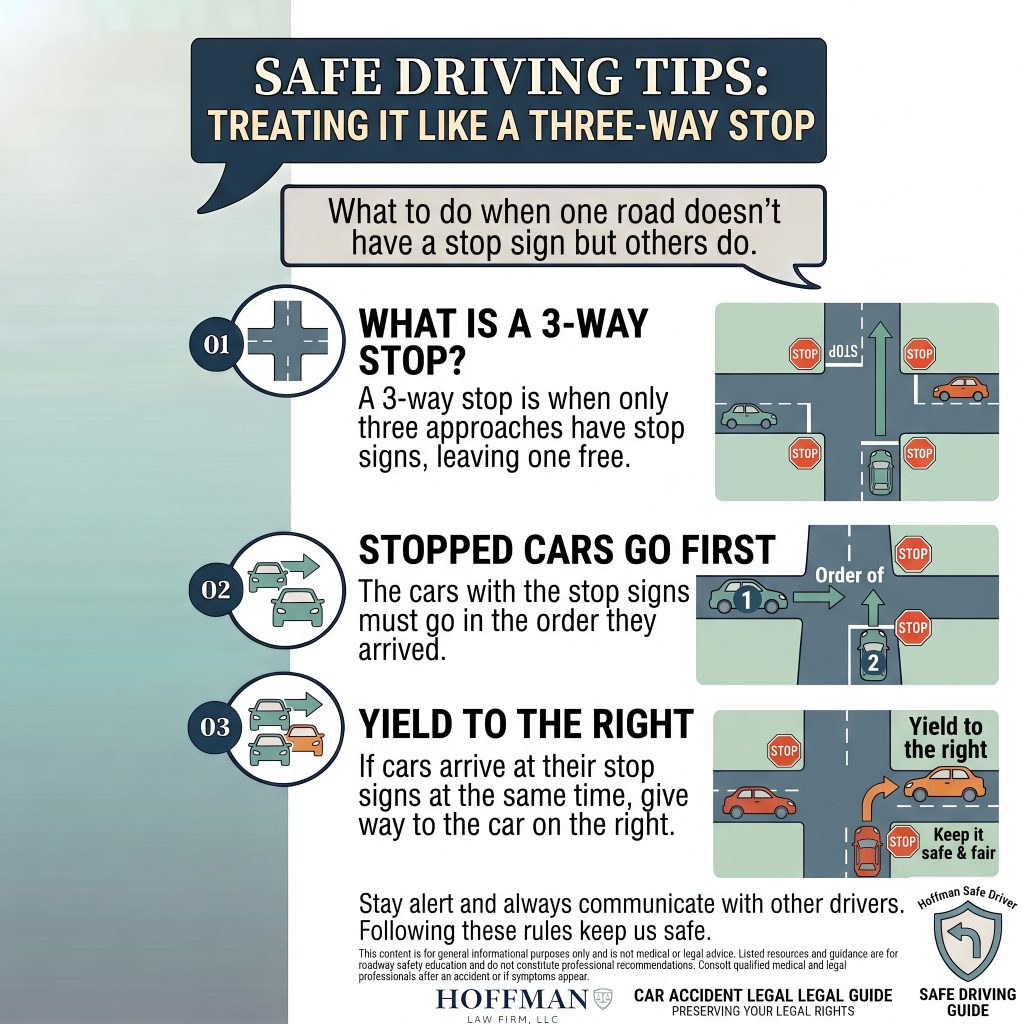
Dealing with a Three-Way Stop
Now, let’s say one road at the intersection doesn’t have a stop sign, but the others do. In this case, it’s like a three-way stop. The cars with the stop signs are the ones that get to move first, and they go in the order they arrived. If a bunch of cars all reach their stop signs at once, remember the rule about giving way to the car on the right.
So, even though it might seem a bit confusing, following these rules when the traffic lights fail helps us keep things safe and fair on the road.
How to Stay Safe
When driving through an intersection without working traffic lights, the number one priority is for you to stay safe. Always take your time and never rush or speed through the intersection. Give yourself time to assess the situation, especially during times of inclement weather when visibility may not be ideal.
Remain calm, courteous, and patient, and always check for pedestrians or road crews who may be standing nearby. Safely navigate the intersection by yielding to the vehicle to the right, if more than one vehicle approaches the intersection at the same time.
If there is an officer or traffic control person on the scene, follow the directions given at the intersection. Remember to drive cautiously and stay aware to help keep yourself, your passengers, and other drivers safe.
Need Legal Advice After Car Collision in Lowcountry? Contact Hoffman Law Firm
Traffic lights guide everyday drivers through the roads in an orderly fashion. However, traffic lights can give out due to inclement weather and other factors, so it is important to know the rules of the road to stay safe in this situation. If you happen to be involved in a car accident due to faulty traffic lights, our personal injury lawyers will be glad to help.
Located in Charleston and Georgetown, SC, we support accident victims throughout the Palmetto State. Our personal injury lawyers here at Hoffman Law Firm have extensive experience handling a wide variety of cases.
Plus, you only pay us if we win your case.
We have established a reputation of proven results, as well as great service! To meet with a member of our team, schedule your free consultation today. Attorney David Hoffman and our legal team are here to help.
Our personal injury law firm offers trusted legal representation right here in the Lowcountry, including these practice areas:
- Personal injury
- Car Accident
- Truck Accident
- Motorcycle Accident
- Wrongful Death
- Brain Injury
- Spinal Cord Injury
HOFFMAN LAW FIRM CASE RESULTS
$4,000,000 RECOVERED IN CAR ACCIDENT CASE
Recovered for a man struck by a box truck who had run a red light.
$2,500,000 RECOVERED IN CAR ACCIDENT CASE
Jury verdict for a woman with $200,000 in medical bills that was t-boned by a distracted driver.
$1,950,000 RECOVERED IN CAR ACCIDENT CASE
Recovered for a man who struck a poorly lit commercial trailer.
Sources
- South Carolina Code of Laws Title 56, Section 5-2740 (Stop Signs and Yield Signs): Establishes the statutory duty for motorists approaching stop signs to stop at marked lines and yield right-of-way to vehicles that have entered or are approaching the intersection.
- South Carolina Code of Laws Title 56, Section 5-970 (Flashing Signals): Governs driver behavior at intersections with red and yellow flashing signals, codifying stop-and-proceed requirements for flashing red indicators.
- South Carolina Department of Public Safety (SCDPS) Collision Guidelines: Official state reporting protocols, right-of-way compliance directives, and collision investigation procedures across South Carolina roadways.
- Federal Highway Administration (FHWA) Signalized Intersections Safety Guide: National research and highway engineering standards regarding intersection collision dynamics, signal malfunction counter-measures, and right-of-way conflict mitigation.
Learn More
Intersections, Traffic Signals & Road Rules
- Mass Traffic Light Outage in Summerville: Staying Safe and What to Do When a Traffic Light Is Out: Local guidance on navigating widespread signal blackouts across Dorchester and Berkeley counties, including critical first steps after an outage-related wreck.
- Liability Is on the Left: Who Is at Fault in a Left Turn Accident in South Carolina?: How comparative fault, right-of-way statutes, and failure-to-yield determinations apply to intersection turn collisions under South Carolina law.
- James Island SC Intersections to Receive Millions in Road Improvement Plan and How to Avoid an Intersection Accident in the Meantime: An overview of dangerous Lowcountry intersections, scheduled regional roadway improvements, and defensive driving practices to avoid T-bone collisions.
- Who’s at Fault in a Roundabout Accident?: Right-of-way yielding rules, circle navigation standards, and how liability is evaluated when alternative intersection designs replace standard lights.
- Pedestrian Traffic Laws in South Carolina: Crosswalk regulations, pedestrian rights-of-way, and driver legal duties when traffic control devices are offline or unpowered.
Driving Behaviors & Crash Prevention
- Are Driver Assistance Technologies Preventing Car Accidents?: How automated emergency braking, lane keep assist, and collision sensors help reduce intersection impacts and serious crashes.
- Distracted Driving Is the Most Common Cause of Car Accidents: The risks of phone use and split-second delays behind the wheel, especially when approaching dark or congested intersections.
- How To Properly Change Lanes And Avoid A Car Accident: Best practices for blind-spot checks, signaling, and right-of-way positioning to avoid sideswipes near multi-lane intersection approaches.
- Tailgating: A Dangerous Driving Tactic: Why maintaining adequate following distance is vital to prevent chain-reaction rear-end collisions during sudden traffic stops.
- Road Rage and Car Accidents: The Danger of Anger: Identifying aggressive driving behaviors, avoiding escalation at stalled intersections, and establishing legal liability for reckless driving.
Insurance Claims & Legal Recourse
- Should I Speak To My Insurance Company After A Car Accident?: What to say and what to avoid when reporting a collision to adjusters to protect your rights before giving a recorded statement.
- Common Insurance Company Tactics That Minimize Your Car Accident Settlement: Common strategies adjusters use to dispute crash liability, undervalue medical costs, and pressure injured motorists into fast lowball settlements.
- Accidents Involving An Uninsured Driver: What steps to take, how uninsured motorist (UM) coverage operates in South Carolina, and legal recourse when an at-fault driver has no coverage.
- Filing a Wrongful Death Claim After a Fatal Car Accident: Legal rights, statutory beneficiaries, and compensation options available to families after fatal traffic collisions in South Carolina.
Injuries & Medical Care
- Do I Need to See a Doctor After a Minor Car Accident?: Why immediate medical evaluation is essential to uncover hidden internal injuries and establish medical documentation for an insurance claim.
- How Long Does Whiplash Last After A Car Crash?: Expected recovery timelines, treatment plans, and necessary medical records for soft-tissue and neck injuries caused by sudden vehicular impact.
- How To Get Compensation For PTSD After A Car Accident?: How post-traumatic stress, driving phobias, and emotional trauma are formally documented and recovered in South Carolina personal injury claims.
Disclaimer: This article is for informational purposes only and is not legal advice. Traffic laws may vary by circumstance. Consult a qualified attorney regarding your specific situation.

