

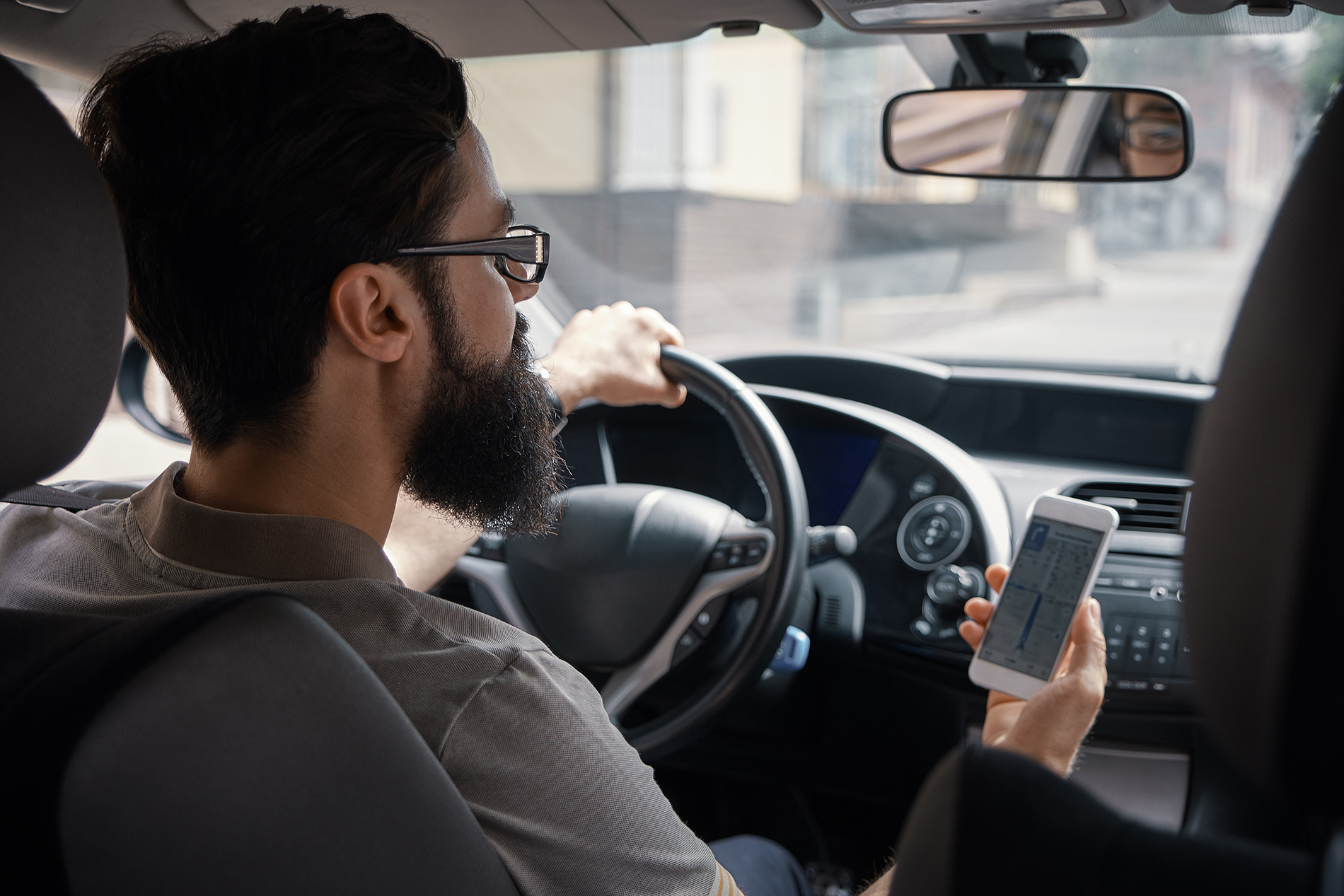
We never realize how much our phones are integrated into our daily lives until we are forced to go without them.
When we have a question, we turn to our phones. When we want to go out to dinner with a friend, we turn to our phones. When we want to check our bank accounts, we turn to our phones.
It has become an almost unconscious effort to open our phones, giving us instant access to the world around us. But this instant access, while beneficial in many ways, can have dangerous consequences if you open your phone at the wrong time.
Distracted driving is on the rise, but it encompasses more than just our cell phones. Keep reading to learn what it is, what it covers, and how our team can help if someone else’s distraction causes your accident.
What is Distracted Driving?
According to the National Highway Traffic Safety Administration (NHTSA), distracted driving involves any activity that diverts attention away from the road. Distracted driving can be divided into three main types: visual, manual, and cognitive.
Visual Distractions
Visual distractions are those that take your eyes off the road. This could include checking your navigation system, checking the song name on Spotify, or searching the floor of your vehicle for anything that may have fallen.
Manual Distractions
Manual distractions are those that cause you to take your hands off the wheel. This could be eating or drinking while driving, checking your phone, or adjusting the volume.
Cognitive Distractions
Cognitive distractions are those that take your attention away from the road. This could be talking to a fellow passenger, road rage, driving under the influence, or drowsy driving.
Impact on a Grand Scale: Distracted Driving Statistics & Data
Taking your eyes off the road for a split second can have dangerous consequences that could last a lifetime – ones that could even cut your life short.
The NHTSA reports that between 2010 and 2019, about 3,000 people died in distracted driving accidents every year. And if that number didn’t speak volumes, nine people in the United States are killed every day in crashes involving a distracted driver.
Visual distractions, such as reading a text message, may feel like it only takes your eyes away from the road for a split second, but in actuality, reading a text for five seconds while going 55 mph is the equivalent of driving the length of an entire football field – with your eyes firmly closed.
It’s important to note that distracted driving dangers exist whether you are behind the wheel or simply on the sidewalk. In 2019, it was reported that one in five people who died in distracted driving-related crashes were not in vehicles – they were walking, riding their bikes, or just outside of a vehicle.
H2: What You Can Do to Prevent Distracted Driving (And How We Can Help in the Worst Case Scenario)
While we can’t control those around us, we can control our approach. To help you avoid distractions while behind the wheel, consider the following:
- Set your phone to “Do Not Disturb” or utilize the “Texting While Driving” feature to notify friends and family that you can’t be on your phone
- Use radio presets or select Spotify playlists prior to driving
- Make adjustments to your seat, steering wheel, and mirrors before hitting the road
- Speak up about the dangers of driving distracted to those around you
Despite doing everything in your power to prevent distractions while driving, other drivers may not hold themselves to the same standards.
If you are involved in an accident with a distracted driver, our team at Hoffman Law Firm can help. Our team has years of experience in car accident claims, helping those seek justice and the compensation they deserve.
As the leading law firm in Charleston and Georgetown, our team proudly advocates for accident victims throughout the Palmetto State. As the locals’ trusted personal injury law firm, we have extensive experience handling a wide range of cases.
We have established a reputation for success and excellent service! To meet with a distracted driving accident lawyer, schedule your free consultation today!
Disclaimer: This content is for general informational purposes only and does not provide legal advice. Viewing this site or contacting Hoffman Law Firm does not create an attorney–client relationship. An attorney–client relationship is formed only through a signed written agreement. Past results do not guarantee future outcomes. Every case is different and depends on its specific facts and applicable law. This website may be considered attorney advertising. Hoffman Law Firm practices law in South Carolina.

