

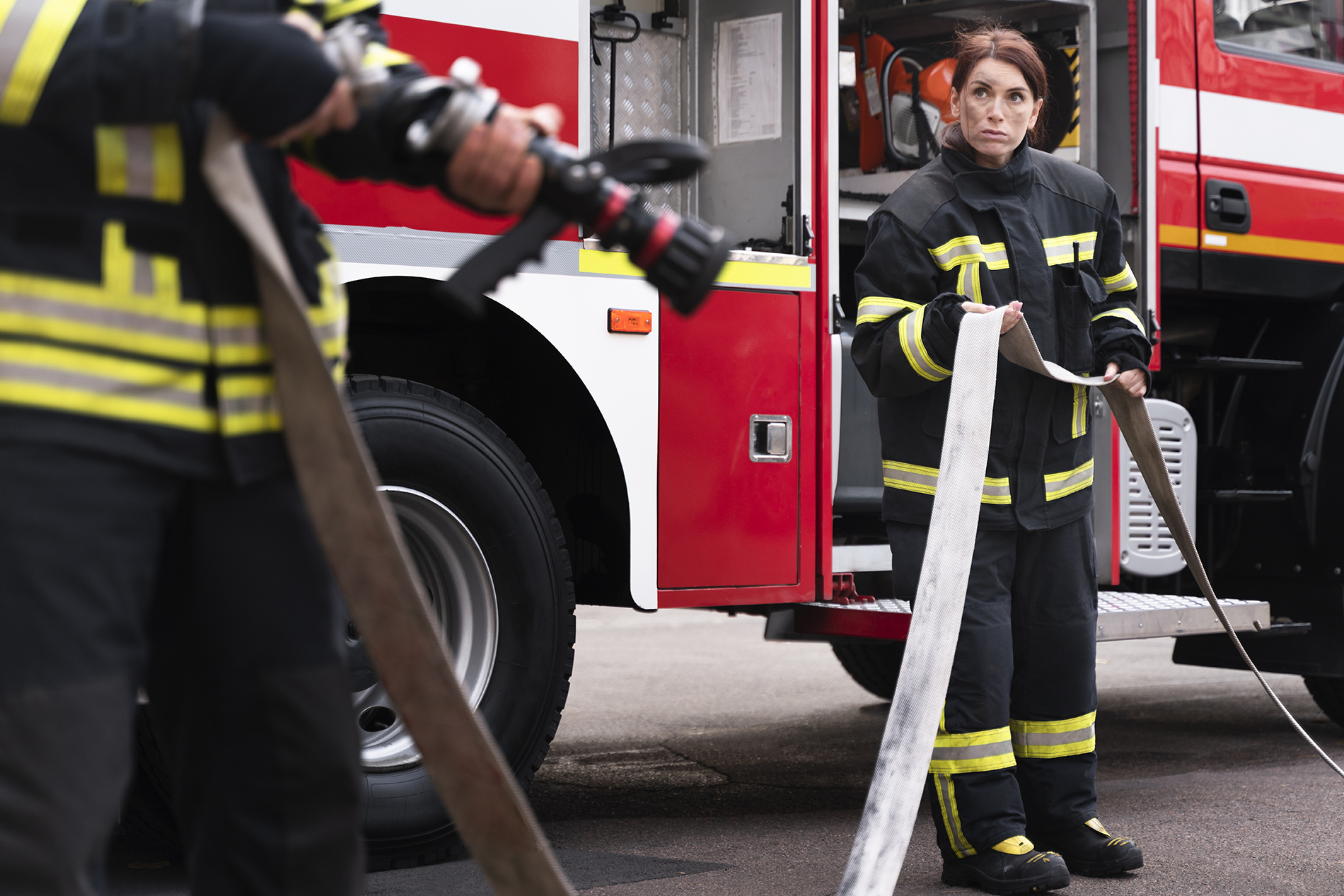
When an accident occurs, first responders are on the scene, tending to injuries and saving lives, acting as quickly as possible to ensure your safety and looking out for you in your time of need. But who is looking out for first responders when they’re hurt on the job?
Firefighters, police officers, EMTs, and other first responders face life-threatening situations daily, increasing the possibility of on-the-job injuries and even illnesses down the road. Fortunately, first responders are entitled to workers’ compensation benefits, but developing work-related illness later in life can raise more questions. That’s why having a skilled workers’ comp attorney by your side is essential.
Hoffman Law Firm is here to help you understand your benefits as a first responder. Continue reading to discover more about your eligibility and the laws that support first responders in obtaining the help they need.
Who Qualifies as a First Responder?
The term “first responder” is defined as an individual who responds to a fire, medical, hazardous material, or other similar emergencies in the course of their professional duties.
First responders commonly include:
- Firefighters
- Police officers and other law enforcement personnel
- Emergency medical technicians (EMTs)
- Paramedics
- Volunteer emergency responders
As first responders, these individuals face unique and potentially dangerous environments on a daily basis as part of their job duties. These high-risk scenarios significantly increase the risk of injury for first responders, regardless of which team they are associated with.
Fire and rescue services handle everything from technical rescues to hazardous materials spill clean-ups to fire prevention. Between 2011 and 2015, fires accounted for two-fifths of fatal work injuries, including forest or brush fires and structural collapses during a fire.
According to the U.S. Bureau of Labor Statistics, law enforcement workers suffered 606 fatal work injuries between 2011 and 2015.
With the risk of injury and illness being much greater compared to other professions, questions about how workers’ comp coverage works for first responders are often brought up, and our team at Hoffman Law Firm can help clear up the rights you’re entitled to.
First Responders and Workers’ Compensation Eligibility
We commonly hear the question, “Are first responders entitled to workers’ compensation after an injury on the job?”
Under South Carolina law, nearly all employers with at least four employees must provide workers’ compensation coverage to both full-time and part-time staff, including first responders.
Those facing an injury as a first responder are entitled to several benefits under workers’ comp coverage, including:
- Medical benefits: coverage for all medical expenses, including hospital visits, surgeries, medications, ongoing treatment, etc.
- Vocational rehabilitation: Some injuries may prevent first responders from returning to their previous role. When this occurs, you may be eligible for vocational rehabilitation services that provide training and help you locate another job.
- Compensation for lost wages: In the case that you are unable to work, compensation for lost wages is provided at two-thirds of your weekly average wage.
- Death benefits: In the event that a first responder loses their life on the job, dependents may receive death benefits, which include a percentage of wages and coverage for funeral costs.
When you’ve been injured on the job, making sense of your workers’ comp benefits while trying to focus on recovery, pain management, physical therapy, and medical bills can be a difficult task to handle alone. A skilled workers’ compensation attorney can help you navigate the benefits you’re entitled to, so you receive the maximum available coverage.
Workers’ Comp Presumption Laws for First Responders
First responders often see illnesses, such as cancer, arise later in their careers or after retirement. Most of the time, these illnesses do not have a specific incident to relate them to, like other workplace injuries. This is where presumption laws come into play.
Presumption laws are designed to remove the usual burden of proof in workers’ comp cases for first responders.
In a standard workers’ comp claim, the injured employee must prove that their injury or illness was brought on by their job duties. This can become incredibly difficult for first responders, as certain afflictions won’t be diagnosed until years into their careers
Presumption laws remove the need for proof altogether. For example, if a first responder shows they have a covered condition, such as cancer, the law creates a rebuttable presumption that it was job-related. This ensures that the first responder has quicker and easier access to medical treatment and benefits.
Even though presumption law provides a more straightforward path to benefits for first responders, keep in mind that the presumption does not guarantee benefits – it only starts the process in the employee’s favor.
Conditions covered by presumption laws include:
- Cancer (commonly covered types include bladder, kidney, colon, skin, prostate, and testicular cancer)
- Heart and cardiovascular disease
- Respiratory disease
- Infectious disease (this may include tuberculosis, hepatitis, HIV/AIDS, MRSA, and meningococcal meningitis
- PTSD and Mental Health: This is the newest and fastest-growing category, though navigating it can still be tricky. As mental health conditions can be more difficult to prove and receive coverage, it is beneficial to work with a workers’ comp attorney for help.
Speak with a Charleston Workers’ Compensation Attorney Today!
As a first responder, putting your life on the line comes with the job title, and as someone dedicated to this line of work, you deserve to receive the maximum available benefits when you get injured on the job or become ill because of your career.
At Hoffman Law Firm, our attorneys are experienced in workers’ comp cases and have a strong track record of securing the compensation our clients need. Whether you’re injured or sick, recovering and feeling well on a daily basis should be your main focus, not battling your employer and their insurance companies with the complex details of workers’ comp law and presumption laws – you can leave it to Hoffman.
With offices in Georgetown, SC, and Charleston, SC, our personal injury law firm supports accident victims throughout the Palmetto State. As the leading workers’ compensation lawyers in Charleston and Georgetown, we have established a reputation for success and exceptional service.
Schedule your free consultation today with a personal injury attorney in Charleston or Georgetown, SC, and we will take it from there.
Disclaimer: This content is provided for informational purposes only and does not constitute legal or medical advice. Reading this page does not create an attorney-client relationship. Every case is unique, and past results do not guarantee future outcomes. Attorney advertising. Hoffman Law Firm is licensed to practice law in South Carolina.

